An Innovation Partner, your school needs.
Every school needs a central innovation unit and a brand communication advisory.
We are building a whole operating system at the backend so that you can plug it in your school and become the most innovative school in the vicinity.
Running a school means living inside its chaos, every single day.
A principal or owner is surrounded by teachers, parents, vendors, admissions pressure, technology decisions, and a dozen half-finished initiatives, all happening at once, all demanding attention right now. What’s almost always missing isn’t more effort. It’s someone standing slightly outside that chaos, watching it over time, and steering the school toward a structured direction instead of reacting to whatever’s loudest that week.

Large school chains can afford an internal strategy team to do exactly that. Most independent schools can’t, and shouldn’t have to, just to get access to that kind of steady, external observation.
That’s what the Desk is for. Not to put out today’s fire. To make sure your school is moving somewhere real, on purpose, month after month.
The schools that survive the next decade won’t be the ones with the newest buildings. They’ll be the ones parents can’t stop talking about, for the right reasons.
And the desk can help you immensely at an unbelievably low price.
An alternative brain for your school.
Every school leader occasionally needs someone who isn’t inside the organisation to ask:
Have we identified the real problem? Why do you think this is happening? What if we approached it differently? Is this actually worth solving right now?
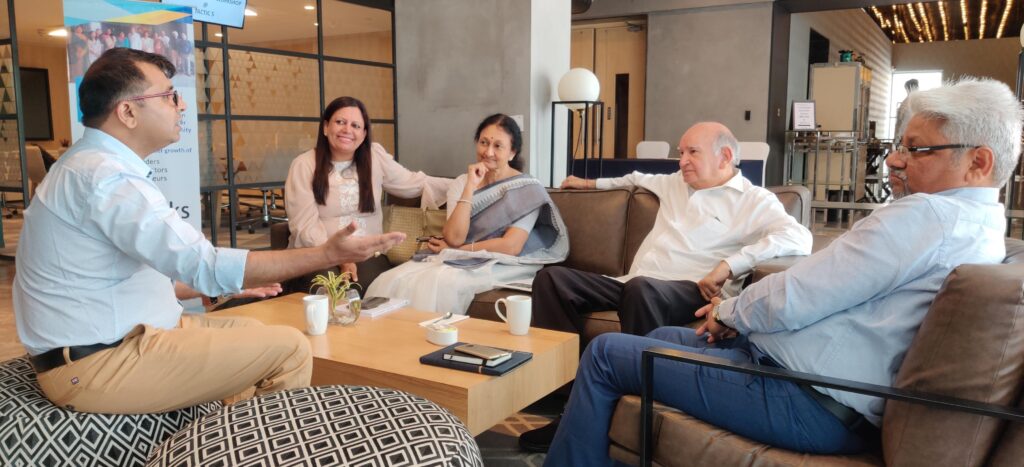
The EdMonks School Partner is that person — a senior educationist with real school leadership experience, who observes your school continuously, not just when something’s gone wrong. Over time, they build a real understanding of your context, your priorities, and where you’re actually headed — so the conversations you have aren’t isolated fixes, they’re steps in a structured path.
School Leader ↔ School Partner ↔ EdMonks Central Innovation Team
Your Partner understands your school’s specific context, built up over time. Behind them, the EdMonks Central Innovation Team brings deeper specialist expertise whenever a question needs it.
What we do
SEE → THINK → CHOOSE → ACT → LEARN
- See — Understand what’s actually happening, not what it seems like on the surface.
- Think — Explore causes, alternatives, and what’s actually within your control.
- Choose — Decide what genuinely deserves attention right now.
- Act — Identify a real, specific next step.
- Learn — Review what happened, honestly, and decide what comes next.
This isn’t a one-time recommendation. It’s a cycle your Partner runs with you, again and again, as your school’s questions change.
This isn’t a helpline for today’s fire. It’s often most valuable before you even know what the question is.
Some weeks, you’ll bring something specific. Other times, your Partner will be the one who notices a pattern first — because they’ve been watching your school closely enough, for long enough, to see it before you do.
Real questions this kind of relationship surfaces, over time:
- “We want to improve reading. Where do we even begin?”
- “Our admissions have stagnated. What are we missing?”
- “We want to introduce AI meaningfully. What should we actually do?”
- “Our teachers attend training, but classroom practice isn’t changing.”
- “We have too many initiatives running. What should we stop doing?”
- “I want to build something distinctive in my school. Where do I start?”
None of these get solved in one conversation. They get worked through, month over month, as part of a structured view of where your school is actually headed.
Right now, one person carries this. That’s deliberate, and it’s temporary.
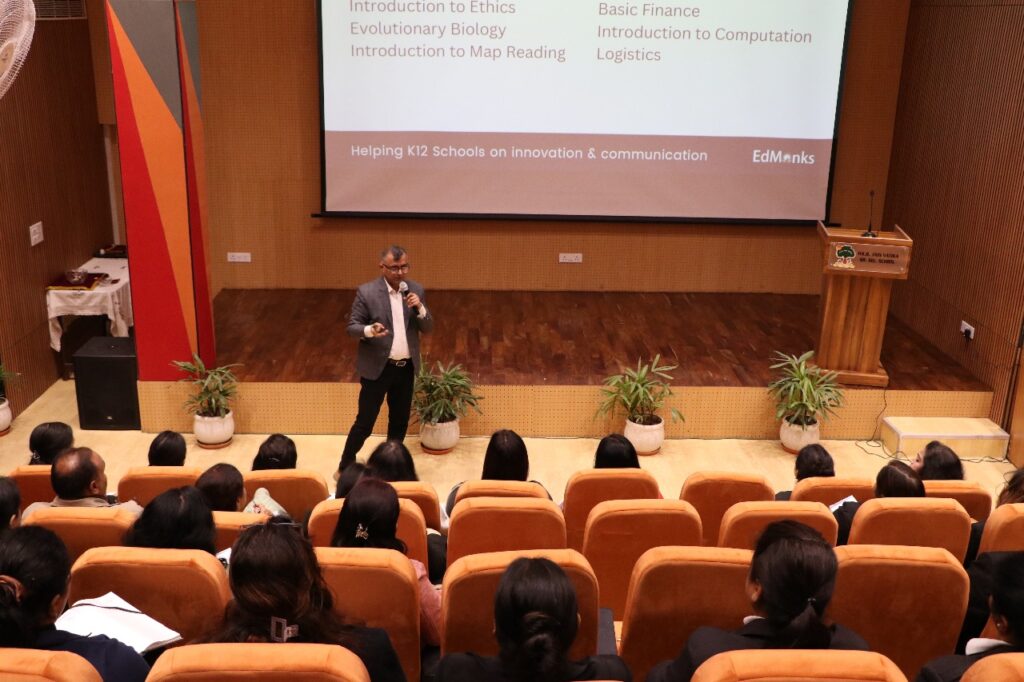
Every founding school’s School Partner is Anupam Kaushik, the person behind EdMonks, who has trained thousands of school leaders and personally run the pilots this approach is built on. As a founding partner school, you’re working directly with that experience, not a junior team member.
As EdMonks grows, we’re building the Central Innovation Team: specialists your Partner can bring in the moment a question needs deeper expertise than one person can carry alone:
- Curriculum & Pedagogy
- Teacher Development
- Assessment & Learning Outcomes
- School Communication & Positioning
- Admissions & Growth
- Educational Technology
We’d rather tell you honestly that this bench is being built than pretend it’s already large. Founding schools get the advantage of direct access to the person building it, and a front-row seat as it grows.
Your Partner understands your school. The team behind them brings the depth.
When a question needs specialist expertise, your School Partner brings in the right person from the EdMonks Central Innovation Team — covering curriculum, pedagogy, teacher development, assessment, school communication, admissions and growth, positioning, and educational technology.
You get one relationship, backed by a full bench.
Sometimes thinking clearly is enough. Sometimes you need to act.
The Desk itself is a thinking and direction-setting relationship. When a school decides it needs deeper implementation, your Partner helps identify the right next step — an EdMonks solution built for that need, or, when that’s genuinely the better answer, a trusted partner elsewhere.
Desk → Need identified → Right intervention → Implementation
We don’t recommend something because we want to sell it. The Desk only stays credible if its advice stays independent of what we happen to offer.
Who Is It For
FOR SCHOOL OWNERS “Where should we take this school?” Use the Desk to think through positioning, growth, priorities, and the bigger decisions that shape where the school is headed.
FOR SCHOOL PRINCIPALS “What could I make happen in this school?” Use the Desk to strengthen teachers, improve the student experience, and build something distinctive — one real initiative at a time.
Same Desk. Different questions, depending on which seat you sit in.
We understand before we recommend anything. Here’s exactly what that looks like.
1. A real conversation, not a pitch. We talk about your school as it actually is — what’s working, what isn’t, and what’s been tried before. No proposal at the end of this call.
2. A quiet observation period. Before your Partner suggests anything, they spend time understanding your school’s real context, its people, its history, its current priorities. Usually a few weeks, not a single afternoon.
3. Your first SEE → THINK cycle, shared back to you. Your Partner brings back what they’ve actually seen, in plain language, and works through it with you, not a report you read alone, a conversation you have together.
4. The ongoing rhythm begins. Regular conversations, grounded in that growing understanding, start running through the year — building steadily toward CHOOSE, ACT, and LEARN, one real decision at a time.
There’s no long onboarding form and no upfront commitment beyond that first conversation. The relationship starts the way it’s meant to continue — by understanding first.
EdMonks School Innovation Desk
₹60,000 / year
- A dedicated School Partner
- Continuous, structured observation of your school through the year
- Regular leadership conversations, grounded in that ongoing view
- Access to the full EdMonks Central Innovation Team
- A clear, running picture of your school’s context and challenges
- Honest guidance on what deserves attention next
You don’t have to solve everything this year.
You need to know what actually matters most — and have someone experienced enough to think it through with you, and honest enough to tell you what to leave alone.
We’re currently building the first network of EdMonks School Partners, and inviting a small number of independent schools to be founding partners. This isn’t a large existing network yet — it’s a new relationship, built one school at a time, starting with yours.
Why we exist
Most effort in school space improves what already exists. Very little of it asks whether what exists is the right thing at all.
After several years inside schools, and the businesses that serve them, we think Indian education needs disruptive innovation, not another efficiency pass. That’s the only reason EdMonks exists.
Read the full story → About EdMonks
8+
Years working inside the Indian school market
580+
School leaders and founders on the EdMonks newsletter